
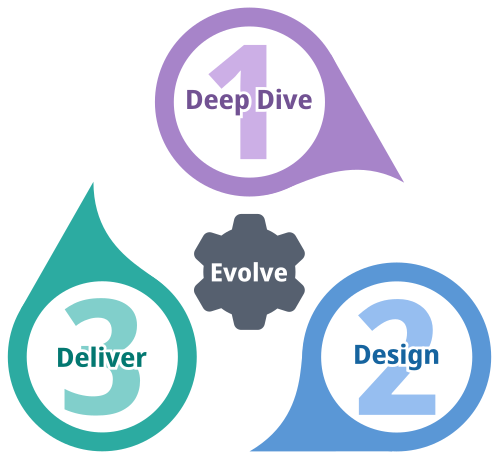
Think QI Model
Building our capability for continuous improvement leads to better outcomes for our communities. Be part of the change and learn more about Quality Improvement and our Think QI model below.
Think QI model step-by-step guide
The Think QI model will help you to make a change or improvement to a service.
Learn more about each step in the continuous improvement cycle.
Scoping your project
Before using the Think QI model, you need to understand the basic outline of what you want to do. This is called 'scoping' or 'scope'.
You may find it helpful to write down the scope of your project. It can be used as a reference point when communicating your project to others. You can use our scoping document template.
You should ask yourself questions like:
- What changes you would you need or like to make?
- Why do the changes need to happen?
- Who will benefit from the change?
- Who will be responsible for making the change or how is the change going to happen?
- When will you need to make the change?
- How will you know if the change has made a difference?
- How will you let others know about your plans?
Project charter template
The project charter outlines your project's goals and deliverables, with approval from the appropriate leader or Programme Board for complex projects.
Created at the start of a project, it should be regularly reviewed and updated to keep everyone aligned and avoid duplication of work.
Step 1: Deep dive
Get to the root of the improvement area or problem by really understanding what's going on from all angles. Then you can build a picture that includes baseline data to:
- analyse the current situation
- identify the core issues
- set clear goals
Benefits realisation template
A tool to ensure planned benefits add real value to your service and organisation while assigning responsibility for delivery. Integrated from project start to finish, it tracks progress toward intended benefits.
Step 2: Design
Generate improvement ideas and possible solutions, choosing which elements to test, and designing in more detail. Remember to include how the impact of the change will be measured!
Options Appraisal Template
Use this tool to evaluate the available options to achieve your project objectives. It will help you identify and evaluate the options against a set of criteria. You will then score the options using the options scorecard.
This tool shows the different options to achieve your project's objectives and to evaluate each option's viability against a set of criteria against each option using an Options Scorecard.
These include:
- Benefits
- Timescale
- Financial outlay/profit
Step 3: Deliver
Planning, implementing, testing and measuring the impact of the change or improvement using the PDSA method:
- Plan the change
- Do the change
- Study the results
- Act by adjusting, sharing, and spreading improvements
Project plan tracker
A helpful tool to allow you to keep track of all the actions that need to be taken throughout the life of the project.
It identifies the different workstreams for the project, who will be doing what and by when. It is red, amber, green (RAG) rated so it will be easy to see any slippage in timescales.
Risks, assumptions, issues, decisions and lessons learned
A concise tool to capture and track the key factors that may affect the project. It records all risks, assumptions, issues, decisions and emerging lessons, with RAG ratings to make it easy to spot priorities and areas needing attention.
Download risks and issues at a glance
Download risks assumptions issues decisions lessons learned template
Step 4: Evolve
The final step is to review the change regularly and when indicated, start the cycle again. There is always room to grow!
Lessons learned tool
The lessons learned tool supports regular reflection on what went well and what didn't, capturing insights throughout the project. This log helps guide future projects for you and other teams.
Review achievements, lessons learned, outstanding actions, and recommendations, and develop a schedule for ongoing review. This step is crucial for evolution and continual improvement.
Your QI starter pack
Learn how different tools and resources can support your continuous Quality Improvement!
Tools and resources
Professional tools, resources and templates to support your QI journey.
QI training and support
Energising and nourishing bright sparks, doers and fresh thinkers whatever your role.